What Budget 2026 Signals about Singapore’s Next Phase of Growth
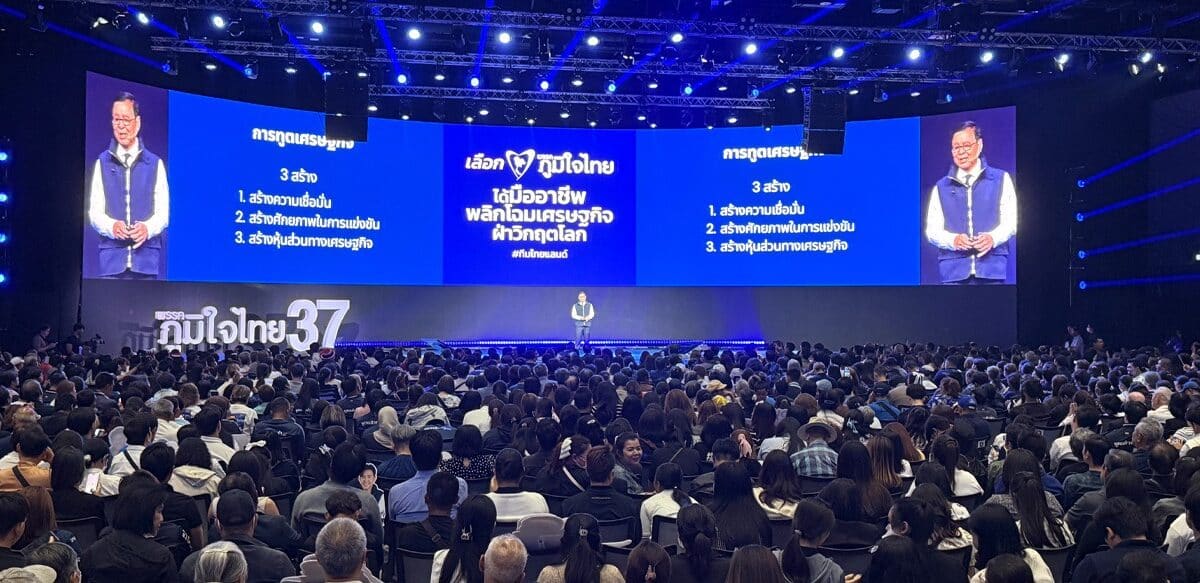
Thailand’s latest general election delivers unexpected stability
February 2026
Simon Buckby, Managing Director, Sandpiper Government & Public Affairs
Just a week before Thailand’s February 8 general election, the newspaper I once wrote for, the Financial Times, branded the country “the sick man of Asia”. This seminal article is a talking point at elite dinner parties in Bangkok, where it is hard to argue that stagnant consumption levels and falling tourist numbers have not compounded the structural problems of an ageing population and household debt now reaching close to 90% of economic production. Lay on top of that all the geopolitical, trade and tariff turmoil of the past year or so, and it is easy to see why the state of the economy is a high priority for voters on average salaries of around US$500 a month and facing GDP growth of little more than 2%.
This is in a country that has had eight military coups since 1970 and three Prime Ministers in the past eighteen months. Add in a destructive earthquake a year ago that exposed systemic corruption, and an ongoing military conflict with Cambodia that has affected supply chains, and it looked like all the stars were aligning for a seismic upheaval.
Political disruption
No wonder that for months the opinion polls have recorded surging popularity for the People’s Party. Some forecast these anti-establishment youthful insurgents with tech-savvy campaign techniques would secure more than 200 of the 500 seats in the House of Representatives, presenting a real challenge to the oligarchs and the military that have underpinned Thailand’s system of government for decades.
Whenever such threats to the status quo have surfaced before, court rulings and what is universally known here as “monkey business” have created governments out of thin air, or at least coalitions of parties representing tiny proportions of the electorate. For example, the party of the Prime Minister going into this week’s election secured less than 3% of the vote for party-list seats last time out, in 2023. Such was the widespread expectation again last week.
And yet.
An unexpected result
The polls were wrong. Despite this economic, political and military context, Prime Minister Anutin Chanrvirakul of the conservative Bhumjaithai Party was returned, and with a thumping 29.93% of the constituency vote and a total of 193 seats. With the People’s Party on a shrunken 118 seats, and former dynastic leader Thaksin Shinawatra in jail for abuse of power, leaving his Pheu Thai Party trailing on 74 seats, Anutin needs little additional support from friendly smaller parties such as Kla Tham to form another government. He has a chance of becoming the first Thai civilian leader to see out a full four-year term since the early years of this century.
The simple reading of this election result is that during a time of turbulence and tumult, Thais have voted for managed stability over confrontation with the establishment. True, they did vote by 65% to 35% in a simultaneous referendum to begin a process to amend the constitution in certain respects, but that could well end up in the long grass for years to come. And there is certainly disillusion with the system, illustrated by a turnout of just 65%, down 10 points from the previous election in a country where voting is mandatory. In addition to the usual apathetic voters, this probably signifies that many decided not to bother turning out for the People’s Party as they believed their choice would be blocked anyway.
That said, Anutin certainly looks the part, and he has put a steady hand on the tiller since he took over in September 2025 after yet another scandal removed his predecessor. His apparent competence as much as his popular nationalist rhetoric over the Cambodia conflict, staunch support for the army, and evident loyalty to King Rama X, have combined to deliver a potentially stable regime in Thailand for the first time in years, against all expectations.
However, the challenges he faces in curing the sick man of Asia are immense, and the winds are hardly favourable. The central question is this: can a bastion of the establishment use this momentum to bring about much-needed reforms to Thailand’s economy and polity?
A pragmatic approach
Anuti has shown himself to be pragmatic. While substantive or structural reforms are probably unlikely in the medium term, it is possible that selective policy changes will be introduced, carefully and incrementally. This means businesses and investors seeking modernisation will need to raise their game when dealing with this government.
Successful engagements will more than ever depend on a thorough understanding of the balance of authority within the coalition, and the priorities of individual ministers, leading to targeted and precise government relations. Sandpiper’s APAC-based Government and Public Affairs team, along with our local delivery partners, is ready to help. We all need to play our part in returning the country we love to health and fitness under its new and unexpectedly stable regime.
Related news & insights: