

The distance between Putrajaya and the household – What Malaysians should watch as the second half of 2026 carries the country towards the 16th General Election
No sides, all options: Southeast Asia in a contested world
July 2026
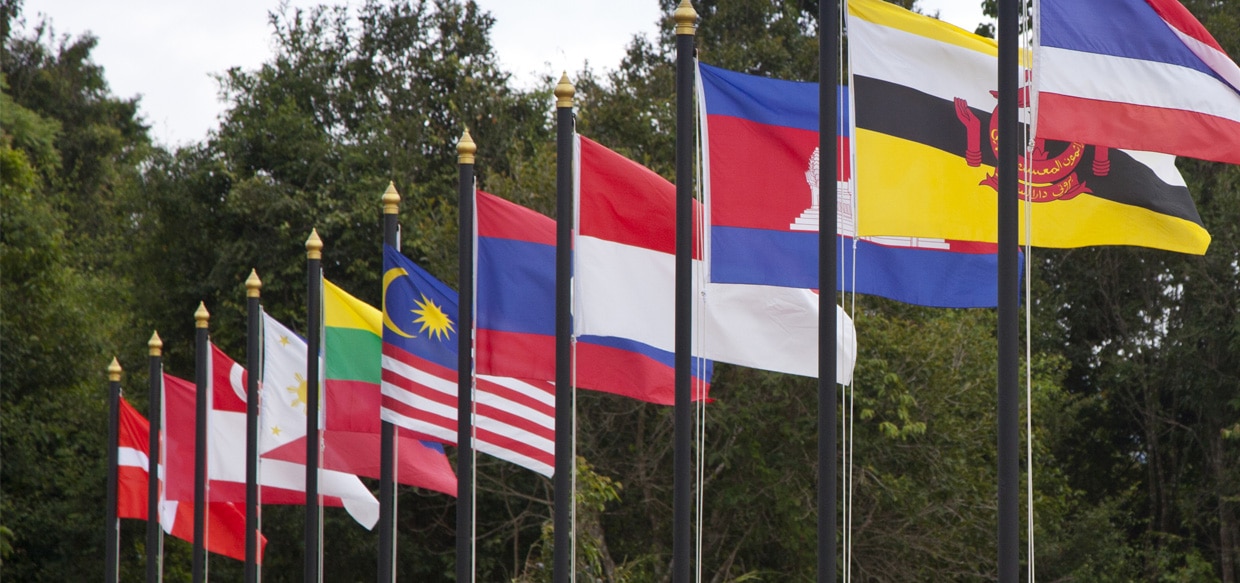
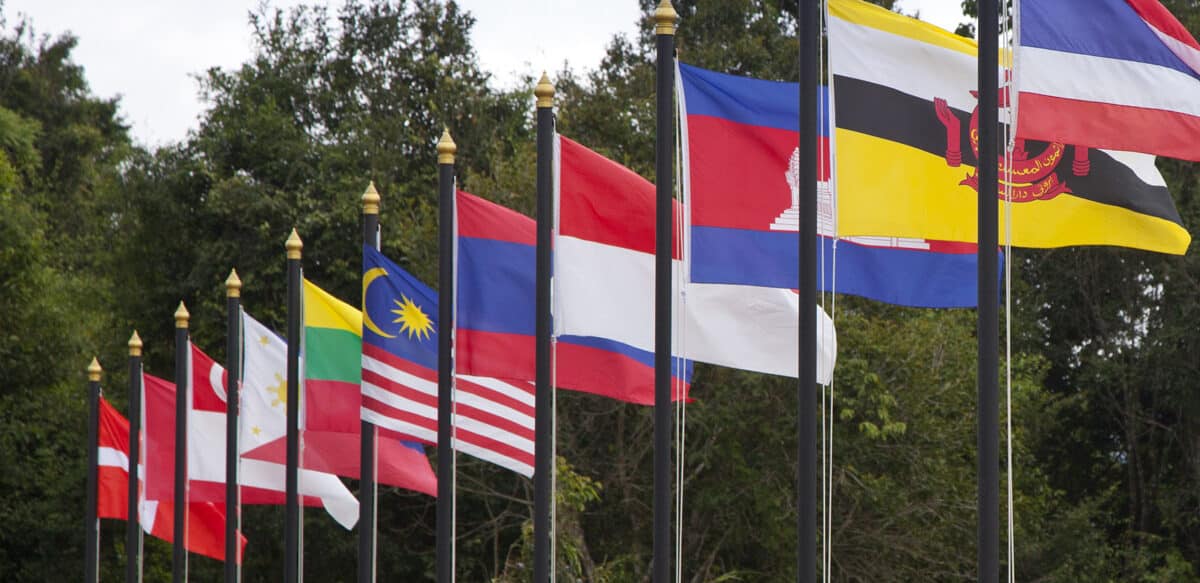
Earlier this month, the Aspen Security Forum convened in the tranquil Colorado Rockies against the backdrop of a world in turmoil. Alliance burden-sharing, fallout from the Iran conflict and AI-driven competition with China dominated the agenda, underscoring how contested US global leadership has become. Yet amid the discussions, one region deserves particular attention. Southeast Asia is not simply reacting to this more contested world – it is quietly redesigning how it engages with it.
Rather than choosing sides, Southeast Asian governments are pursuing a more nuanced strategy: building options. That approach is becoming visible across three areas in particular: security; trade; and multilateral cooperation. Taken together, they reveal a region determined to preserve its strategic autonomy while continuing to engage constructively with all major partners.
Strengthening security without choosing sides
The latest State of Southeast Asia survey by the ISEAS – Yusof Ishak Institute found that US leadership under the Trump administration has overtaken the South China Sea dispute as the region’s foremost geopolitical concern. This reflects growing unease about the reliability and direction of US engagement in the region.
That uncertainty was evident at this year’s IISS Shangri-La Dialogue in Singapore. US Secretary of War Pete Hegseth’s speech emphasised a hard military power approach and spoke of an America that wanted “partners not protectorates”; while ASEAN Secretary-General Dr Kao Kim Hourn reaffirmed Southeast Asia’s long-standing commitment to mutual respect for sovereignty, peaceful settlement of disputes, and rules-based partnership. The divergence in perspectives was striking.
In response, Southeast Asian governments are taking practical steps to strengthen their own resilience. Defence spending is increasing across much of the region, while bilateral security relationships are becoming deeper – and importantly, more diversified.
Japan’s decision earlier this year to fund new maritime infrastructure for the Philippine Navy under its Official Security Assistance programme is one example. Another is the Jakarta Treaty, signed by Australia and Indonesia in February to establish a new framework for bilateral security cooperation. These reflect a deliberate effort to broaden partnerships and reduce dependence on any one security guarantor.
Keeping all trade doors open
The same logic is increasingly shaping economic policy.
As tariffs rise, export restrictions proliferate and supply chains become increasingly politicised, governments across Southeast Asia are pursuing unusually ambitious trade diversification agendas. While these initiatives undoubtedly promise commercial benefits, they also serve a broader strategic purpose: reducing exposure to geopolitical disruption by expanding the range of available economic partners.
The Philippines is seeking to conclude negotiations on free trade agreements with the European Union and Canada this month, while also pursuing its first trade agreement with Chile. Thailand has accelerated negotiations on agreements with the European Union, South Korea and ASEAN-Canada. Singapore, meanwhile, has begun negotiations with the East African Community – its first-ever trade agreement with an African partner.
The pattern is clear: governments are keeping all doors open and building enough alternatives to avoid overdependence on any single market.
For businesses operating across Southeast Asia, this approach also creates opportunities. A region committed to maintaining diverse economic relationships offers companies greater flexibility to invest, operate and grow across multiple markets without becoming caught in geopolitical crossfire.
Coalitions over consensus
Beyond security and trade, the region is also changing how it cooperates.
For decades, ASEAN’s consensus-driven model has been central to regional cooperation. While that approach remains important, broad multilateralism is increasingly being complemented by smaller issue-specific groupings that can generate more practical and timely responses to shared challenges.
Protection of critical infrastructure provides a good example. At this year’s Shangri-La Dialogue, 17 countries launched the Guiding Principles for Underwater Infrastructure Defence Exchanges (GUIDE), a new framework aimed at strengthening cooperation to protect subsea cables and other critical underwater infrastructure. Separately, the Indo-Pacific Maritime Surveillance Collaboration, announced at the Quad Foreign Minister’s Meeting in May, seeks to improve regional maritime domain awareness through practical cooperation.
These initiatives are notable because they reflect a more pragmatic approach to regional cooperation. Rather than waiting for consensus across every issue, governments are assembling coalitions of willing partners around clearly defined challenges.
No sides, all options
Much international commentary continues to frame Southeast Asia through a simple question: will the region ultimately align with Washington or Beijing? Increasingly, that is the wrong question.
The defining characteristic of Southeast Asia’s approach is not indecision or neutrality; it is strategic flexibility. Governments are deliberately creating more choices – diversifying trade relationships, broadening security partnerships and embracing more agile forms of cooperation – to ensure no single external power can dictate the terms of engagement.
Sitting at the epicentre of US-China competition, Southeast Asia may have more reason than most to preserve this flexibility. Its strategy is neither passive nor reactive. It is an active effort to expand room for manoeuvre in an uncertain world.
Tellingly, no Southeast Asia government official spoke at this year’s Aspen Security Forum. While Washington debated its own contested leadership, Southeast Asian leaders were elsewhere – deepening trade ties and AI cooperation. The region is not waiting to see how this story plays out; it is already writing its own.
For businesses, that matters too. Companies operating across Southeast Asia need to understand not only the geopolitical tensions shaping the region, but also the strategies governments are adopting to manage them. Those that do will be better placed to navigate policy change, identify new opportunities and build resilience.
At Sandpiper, our Government and Public Affairs team helps organisations make sense of these political currents – turning geopolitical complexity into practical insight for business decision-making.