Australia’s Renewable Reckoning and APAC’s Opportunity
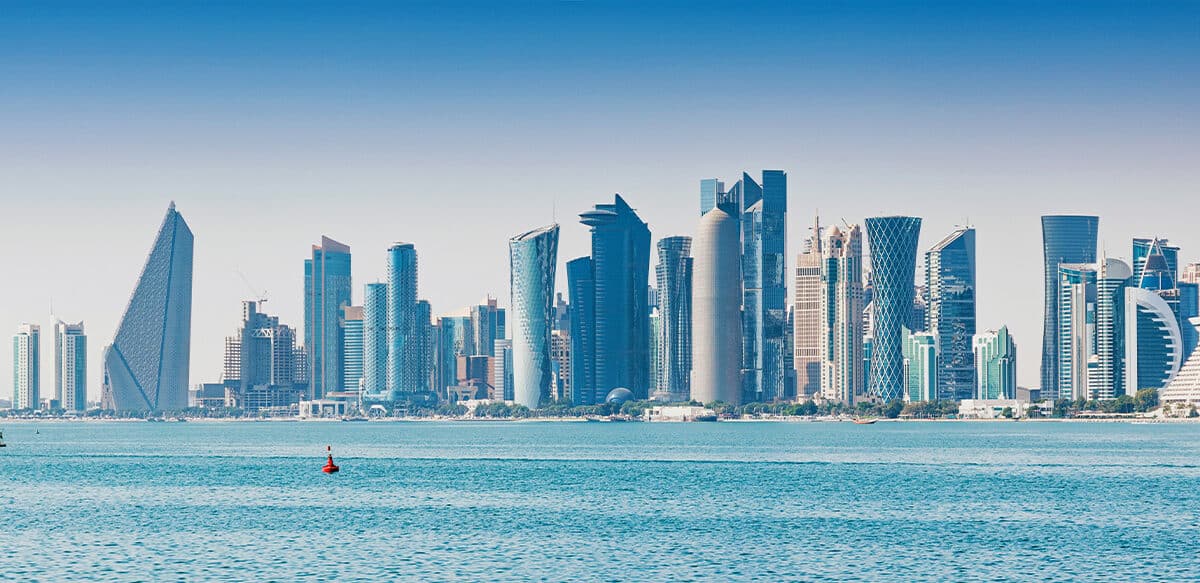
The Strategic Repositioning of Gulf Sovereign Wealth Funds
June 2026
The Middle East conflict has intensified questions about whether Gulf sovereign wealth funds (SWFs) will continue to deploy capital overseas at the pace seen in recent years.
The answer appears to be yes, albeit with a sharper strategic focus.
Despite heightened geopolitical tensions and growing domestic spending needs, Gulf-backed investors have continued to participate in major international transactions, suggesting they are not retreating from foreign direct investment (FDI). Instead, they are recalibrating how and where capital is deployed.
From global expansion to strategic deployment
Over the past decade, Gulf SWFs have established a reputation as some of the world’s most influential strategic investors.
Funds such as the Public Investment Fund (PIF), Mubadala, Abu Dhabi Investment Fund (ADIA) and the Qatar Investment Authority (QIA ) now account for a significant share of global sovereign direct investment activity, particularly across private equity, infrastructure, technology and energy transition assets.
Historically, Gulf capital often targeted trophy assets, including European real estate, with broad portfolio diversification. Today, however, investment strategies are becoming increasingly tied to domestic economic priorities.
AI, energy infrastructure, logistics, advanced manufacturing and defence capabilities are all expected to attract greater focus.
This shift reflects a broader reality: Gulf governments are balancing international investment ambitions with rising domestic capital needs.
Rebuilding priorities at home
The Iran-Israel-US conflict has accelerated this trend.
It has exposed issues across energy infrastructure, supply chains and security frameworks.
At the same time, disruptions to trade routes, mainly the Strait of Hormuz and temporary closures of airspace, have placed pressure on fiscal balances across parts of the Gulf Cooperation Council (GCC).
As a result, sovereign investors could begin to direct more capital toward domestic resilience projects than they have in recent years.
Energy pipelines, digital infrastructure, defence manufacturing and logistics networks are likely beneficiaries.
Importantly, this does not signal the end of international Gulf investment.
Global exposure remains strategically important for SWFs seeking diversification, technology transfer and long-term returns. Many Gulf investors also continue to view the US as a critical partner in sectors such as AI and digital infrastructure. At the same time, Asia is becoming increasingly important within Gulf investment strategies, particularly markets such as China, India, Singapore and South Korea where opportunities in manufacturing, semiconductors, logistics and energy transition infrastructure align closely with Gulf economic diversification ambitions.
However, international investments will increasingly be expected to deliver strategic value alongside financial returns.
What this means for global markets
The Gulf’s sovereign wealth ecosystem has become deeply embedded within global capital markets.
Major investment banks, private equity firms and technology companies now rely heavily on Gulf liquidity to finance large-cap acquisitions, infrastructure projects and AI expansion.
Should Gulf capital allocations slow or shift more decisively inward, the effects could ripple across sectors dependent on large-scale long-term funding.
For financial institutions, the implications are equally significant. Gulf SWFs have become major clients, co-investors and providers of liquidity across global dealmaking ecosystems.
The next phase of Gulf investment activity is therefore unlikely to be defined by withdrawal, but by selectivity.
Strategic alignment matters more
As Gulf sovereign wealth funds evolve, international counterparties will need to adapt their approach.
Capital partnerships are no longer purely transactional. Gulf investors increasingly expect investments to support their domestic programmes, local job creation, technology transfer and long-term economic diversification. This is evident in the number of asset managers now setting up physical presences, mainly in Abu Dhabi and Riyadh.