
The Role of Effective Communications in Building Confidence in Vaccines

Australia’s Federal Budget 2026: Ambitious, Risky and Contentious
Beijing Auto Show 2026: Chinese Carmakers Take the Race to Global Competitors
May 2026
This year’s Beijing Auto Show was a battleground for product, technology and narrative.
Having just concluded in the Chinese capital, the event spanned a record 380,000 square meters across dual venues, hosting 2,000 enterprises from 21 countries and regions, including 181 world premieres and 71 concept cars.
At a time when car shows have been declining in participation, Auto China 2026 proved that the industry remains relevant and can command attention at scale.
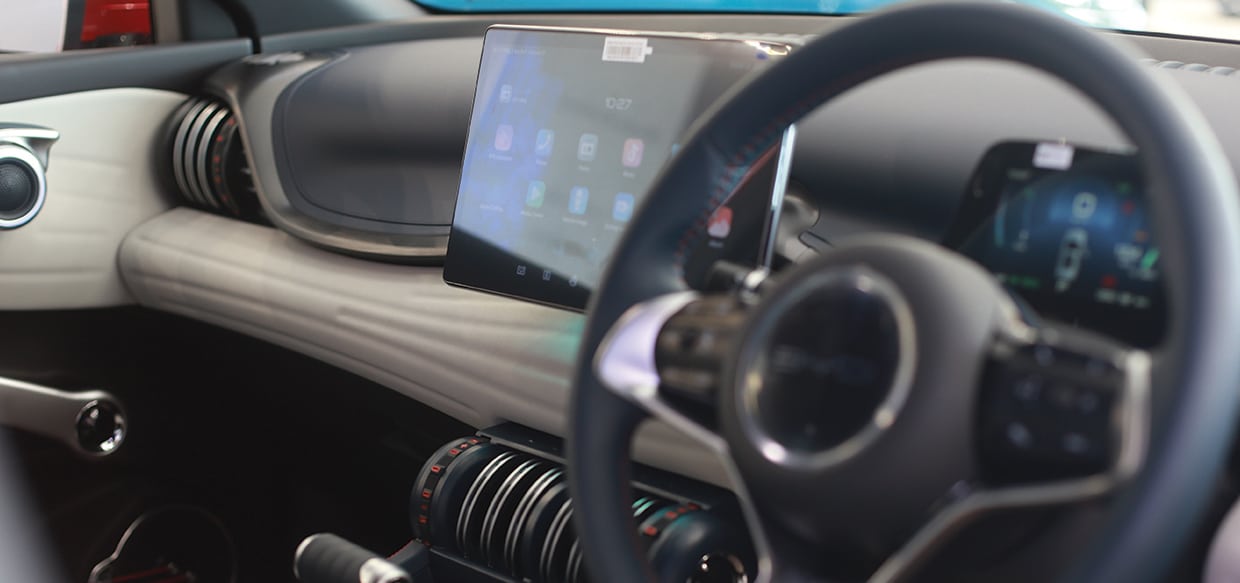
Chinese technology disruptors stole the show. Players such as BYD and Xpeng leaned heavily into intelligent driving and AI-powered cockpit experiences as core selling points.
Meanwhile, multinational heavyweights including Volkswagen, BMW, and Toyota signalled an accelerated push towards localisation, unveiling China-specific EV models to compete with China’s increasingly prestigious home-grown players.
Supporting our clients on the ground with stakeholder engagements and media activities, several key trends emerged. Here are our four key takeaways:
The narrative battle is now as fierce as the product battle.
Walk the floor and the ambition of OEMs is hard to ignore. Charging speed is now a headline battle — brands are competing to win the “minute-level” game. Intelligent driving has become a baseline expectation, with L3-capable models arriving from domestic players and multinationals alike. Cockpit has become a contested space, with AI platforms from ByteDance, Alibaba, and Tencent all vying to become the vehicle’s intelligence layer. The technology on display was substantive. So was the fight to be heard above it.
Every major domestic player arrived in Beijing with a clearly defined story, not just a vehicle. AI, intelligent driving, accessibility, and the Chinese EV going global dominated booth after booth. The result is an intensely crowded communications environment, where generic claims, such as “smart,” “innovative,” or “future-ready” lose impact almost instantly. Differentiation now hinges on clarity of narrative and proof, not volume of messaging.
The supply chain steps into the spotlight.
For the first time, suppliers like CATL and Momenta moved into the main exhibition floors, standing shoulder-to-shoulder with OEMs. Technologies that once sat behind the scenes are now front-and-centre brand assets: the automotive equivalent of “Intel Inside.” Suppliers are moving beyond traditional B2B roles and engaging consumers directly.
Livestreaming is no longer a side channel. It is the show.
Walking across the floor, it was hard to find a booth without someone livestreaming. Influencers, KOLs, brands and reporters were all broadcasting simultaneously capturing and reframing key moments in real time. The implication is clear: message control is structurally diluted. Launch narratives are no longer owned—they are co-created, reshaped, and amplified by a decentralised ecosystem, often beyond the reach of traditional PR orchestration.
To show or not to show – that is the question.
The absence of several global and luxury brands was as noticeable as the presence of others. At a show of this scale, non-attendance also sends a strong message – intended or otherwise – about the market adaptability and commitment. Equally, for brands returning after a hiatus, presence alone is insufficient. Without a clear articulation of “why now” and “what has changed”, a return risks looking reactive rather than strategic. In China, commitment is read through signals as much as statements.
Auto China 2026 reinforces a reality the industry has been steadily recalibrating to: China is no longer just a large market. It is the primary arena where brands and OEMs compete head-on, and where the next generation of automotive technology is being defined.
For companies navigating this landscape, the Sandpiper team has identified three practical priorities:
- Align your narrative with product reality and make it count.
With hundreds of brands competing for attention, a sharp, differentiated value proposition is essential. Know what you stand for, say it clearly, and make sure every touchpoint — booth, spokesperson, content — tells the same story grounded in proof.
- Engage early, and orchestrate across all channels.
In China, traditional media is only part of the ecosystem. Livestreaming is pervasive, and KOLs and influencers will shape perception with or without your participation. Brands that treat booth exhibitions, media and visitors’ receptions as equally important will prevail.
- Presence or absence, you need a communications game plan.
Auto China is a moment of maximised industry attention. Journalists, analysts, consumers, and competitors are all watching — and silence is its own message. Whether you attend or not, have a clear point of view and make sure you’re part of the conversation. Don’t leave it to others to define what your presence — or absence — means.