

No sides, all options: Southeast Asia in a contested world

Green Credibility in Asia’s Data Centre Boom
China’s July Politburo Meeting: Targeted Support and The Limits of Stimulus
August 2026
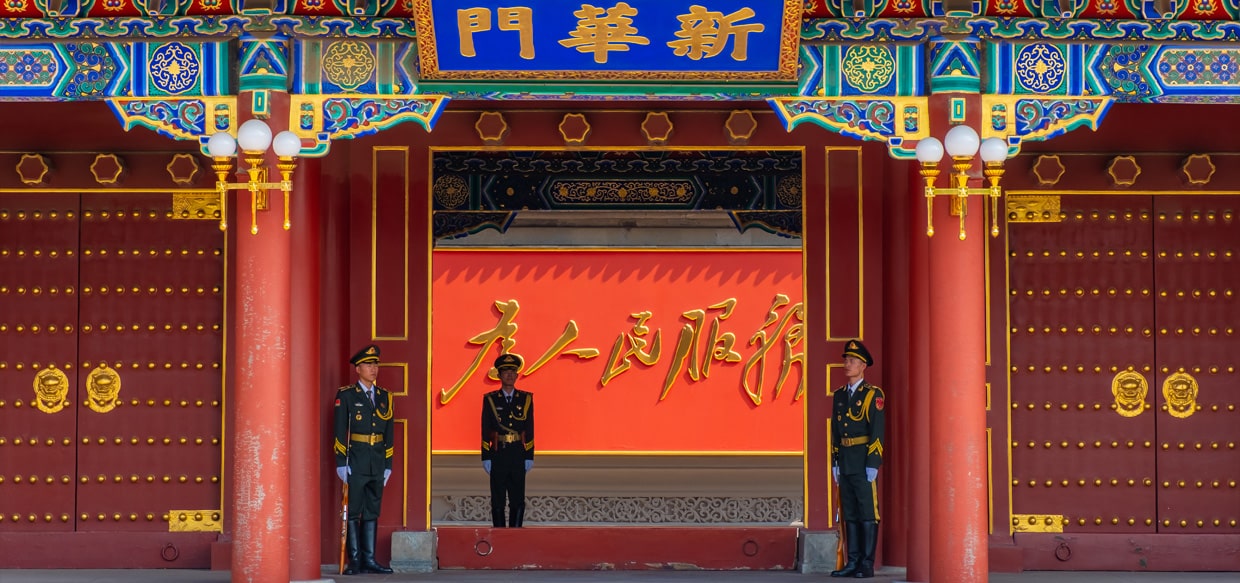
The Communist Party of China held its latest Politburo meeting last week, unveiling the direction of policy priorities for the rest of the year. While this 21-member council of China’s top political brass typically meets monthly, July always garners added scrutiny from outside observers as one of four meetings in the calendar to explicitly focus on the economy — and coming just weeks after the release of China’s second-quarter economic data.
The latest meeting offered more than just a temperature check on the economy, however; we now know that the Central Committee’s next annual plenum is pencilled in for October. The official readout from the meeting was peppered with references to Party discipline and self-governance, revealing an important marker of the CPC’s own internal priorities as it gets ready for the 21st National Party Congress next year, which is likely to see sweeping reshuffles at the top of China’s political pyramid, while Xi Jinping is all-but-certain to secure a fourth term as general secretary.
An unbalanced backdrop
This Politburo meeting came at a somewhat paradoxical time for the Chinese economy. There’s no question that growth has slowed recently; official data recorded GDP growth of 4.3 per cent in the last quarter, the slowest pace in over three years. Nor is there any indication that an uptick in domestic demand may be on the horizon, and the meeting readout certainly did not shy away from acknowledging the “difficulties and challenges” facing the economy.
Yet, policymakers don’t seem too worried. With overall growth for the first half of 2026 at 4.7 per cent, the figures are well within range of this year’s more modest target. China’s export sector is still riding high while advanced manufacturing remains solid – and both remain key pillars of the government’s growth strategy. In all, the latest meeting signalled a carefully calibrated response to a slowing economy: stronger policy implementation, but no dramatic change of direction.
Searching for solutions
Since the pandemic, China has been plagued by the persistent problem of subdued demand. For many, the prolonged property downturn has reduced household wealth and confidence, employment uncertainty has encouraged precautionary saving, and financially constrained local governments are less able to support investment or public services. All this at a time when China’s domestic enterprises have gone from strength to strength, both in production capacity and innovation. The ‘new quality productive forces’ powering China’s economy are unleashing a myriad of cutting-edge products onto the global market, from electric vehicles to AI-related technologies, but at home, the scale of this output is outpacing the domestic economy’s capacity to absorb it.
In response, China’s leadership is calling for more proactive countercyclical adjustment, faster fiscal spending and more effective incremental policies. But there was never any expectation of sweeping, large-scale stimulus. The emphasis remains on making better use of measures already approved rather than trying to find a silver bullet. Ultimately, China’s leadership recognises that the slowdown is serious enough to merit additional support, but does not reach the threshold needed to justify a return to the debt-intensive investment model used after previous downturns.
The Politburo’s answer combines demand support with a continued supply-side strategy. Prescriptions include accelerating fiscal expenditure and bond proceeds, adjusting monetary tools when needed, and proactively implementing major national projects, equipment renewal and consumer trade-in programmes.
On consumption, however, the language remains more conservative. The leadership is advocating for more higher-quality goods and services, capable of catering to evolving tastes and addressing the needs of different consumer groups. If successful, these measures are likely to benefit businesses across a range of sectors, from health and elderly care to tourism and entertainment. Still, this continued focus on improving supply implies that policymakers fundamentally view weak spending partly as a mismatch between what the market offers and what consumers want, rather than as a consequence of insufficient household income, weak social protection and diminished confidence.
Redoubling on innovation
Industrial and technological policy remains the more assertive side of the agenda. The meeting called for deeper implementation of the “AI Plus” initiative, breakthroughs in frontier technologies and the cultivation of new pillar industries. Traditional industries can also be expected to undergo further digital and technological upgrading, which could create substantial opportunities for multinational companies able to offer specialist value propositions, whether through advanced technologies, research expertise, or industrial services. But the commercial environment will remain shaped by national security priorities, localisation pressures and an ever-growing pool of increasingly capable domestic competitors.
Managing risk
Risk containment was also a major focus of the meeting. The Politburo again called for stabilising the property market, implementing measures to resolve local debt, reforming smaller financial institutions and strengthening capital market resilience. None of these problems has a quick solution. Supporting housing demand too aggressively could revive speculation and delay restructuring, while allowing prices and construction to fall unchecked would further weaken household confidence and hit local government funds. Similarly, local debt relief can reduce immediate financial stress but may create moral hazard unless accompanied by changes to how local governments raise revenue and finance development. The likely result is continued incremental intervention, marked by moderate assistance for unfinished housing, consolidation of vulnerable financial institutions, and ongoing central government support for strategically important projects. Businesses should expect stronger demand in policy-favoured technologies and services, but continued caution in property-linked industries and markets dependent on local government spending.
Looking ahead
For international companies, the principal message remains one of managed stabilisation: Beijing intends to place a floor under growth while continuing to reshape the economy around technology, advanced manufacturing and greater economic security. Internationally, the leadership will want to present China as both a dependable growth market and a source of technological and economic leadership when it hosts the APEC Economic Leaders’ Meeting in Shenzhen later this year. The subsequent G20 summit in Miami will provide a more contested setting, where China’s trade surplus, industrial subsidies and production capacity are likely to face sharper scrutiny.
The July meeting therefore serves both domestic and external objectives, looking to prevent a disruptive slowdown while demonstrating that China can combine advanced industrial development with financial stability and greater domestic demand – without resorting to the old-fashioned stimulus playbook. For multinational companies, it would be too optimistic to expect a broad-based rebound; rather, businesses will have to seek new opportunities in a policy-managed economy in which success will increasingly depend on alignment with specific national priorities.