

2026 Summer Davos in Dalian: Embracing transition and opportunity
1 July, 2026
The distance between Putrajaya and the household – What Malaysians should watch as the second half of 2026 carries the country towards the 16th General Election
23 July, 2026
Insurers Have a Bigger Story to Tell on Asia’s Energy Resilience
July 2026
Asia’s energy transition is entering a more complicated phase.
The need to decarbonise has not changed. If anything, recent global developments have strengthened the case for cleaner, more diversified and more regional energy systems. But the transition now has to answer a harder question: can the infrastructure being built today withstand the very risks it is supposed to help address?
That question matters because Asia is trying to do several things at once. It needs to meet rising energy demand, reduce reliance on fragile supply chains, expand clean power, strengthen grids, attract capital and support fast-growing digital infrastructure. All of this is happening as climate risk becomes more severe and less predictable.
Add artificial intelligence to the mix, and the picture becomes even more complex. AI could help businesses model, monitor and manage risk more effectively. It is also driving demand for power, water and cooling, placing additional pressure on systems that are already under strain.
For insurers, brokers and reinsurers, this creates an important opening. The industry has long understood how to price and transfer risk. The bigger opportunity now is to help businesses, investors and policymakers understand risk earlier, communicate it more clearly, and build resilience before it is too late.
The next phase of Asia’s energy transition will be judged not only by how quickly new capacity is added, but by how reliably that capacity can support economies under stress.
Energy security has changed the transition conversation
For years, the transition was discussed mainly through the lens of emissions. That remains essential, but energy security has moved much closer to the centre of the conversation.
Cleaner and more diversified energy systems can reduce exposure to external shocks. Renewable energy, storage, electrification and regional grid interconnection all have a role to play. But building more clean energy infrastructure is only part of the answer.
The region does not just need more capacity. It needs capacity that can survive and perform in the conditions it will face over its operating life.
That sounds obvious, but it is not always how projects are planned. Too many infrastructure decisions are still shaped by upfront cost, historical climate assumptions and timelines that reward speed over resilience. In a region exposed to heat, flood, drought, storms and changing rainfall patterns, that creates a real blind spot.
A solar farm, wind project, battery facility, transmission line or data centre that cannot withstand future climate conditions does not remove risk from the system; it pushes that risk further down the chain.
Climate risk is becoming an infrastructure issue
The physical risks are familiar enough: flooding, extreme wind, drought, heat stress and water scarcity. What is changing is how these risks interact with the transition.
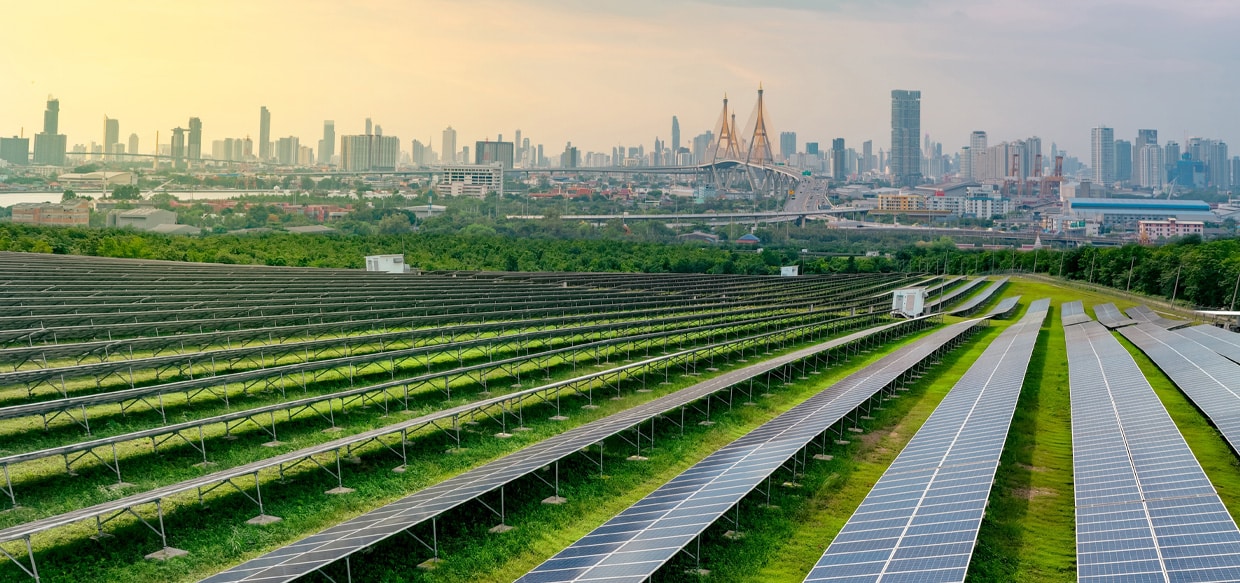
For renewable energy projects, climate risk can affect site selection, asset performance, maintenance costs, financing terms, insurance availability and long-term returns. Flooding can damage substations and access roads. Drought can reduce hydropower output. Higher temperatures can reduce solar efficiency and increase pressure on transmission systems just as cooling demand rises.
The implications go beyond damaged assets. They can affect power supply, project timelines, investment returns and the businesses depending on reliable electricity.
This is why insurers should be part of the conversation earlier. By the time a project reaches the insurance placement stage, many of the most important risk decisions may already have been made. The site has been chosen. The design has been approved. The equipment has been procured. Financing structures may already be in place.
At that point, insurance can still protect against losses, but it may have less ability to influence the decisions that could have reduced those losses in the first place.
The value proposition of the insurance sector should not be limited to capacity. It should include risk insight, engineering expertise, scenario analysis and the ability to translate exposure into commercial consequences.
Heat deserves more attention
Among the climate risks facing Asia, heat is particularly easy to understate.
Floods and storms create visible damage. Heat is quieter. It accumulates across systems, affecting infrastructure, health, productivity and energy demand in ways that are harder to capture but no less serious.
For businesses, heat now belongs in the same conversation as business continuity, workforce safety, infrastructure resilience and energy demand.
It can reduce the efficiency of power generation and transmission. It can increase peak load as households, offices, hospitals, factories and data centres rely more heavily on cooling. It can affect outdoor workers, construction schedules, transport systems and healthcare capacity.
This makes heat a useful example of how climate risk is changing. The most important risks are not always the most dramatic. Sometimes they are the ones that slowly push systems closer to failure.
For insurers, this matters because heat does not sit neatly within one line of business. It can affect property, casualty, health, life, construction, agriculture, energy, infrastructure and employee benefits. It can shape claims experience, underwriting appetite, pricing, duty of care and continuity planning.
It is also a communications challenge. Heat risk is often harder to make tangible than flood or storm risk. That makes it easier for businesses to underestimate, especially if they are still using historical weather patterns to guide long-term decisions.
This is where insurers can help. The industry is well placed to show how slow-moving climate pressures can become financial, operational and human risks.
AI adds pressure and possibility
AI adds another layer to the resilience challenge.
Its potential is significant for insurers and their clients. AI can support climate modelling, asset monitoring, demand forecasting, claims analysis, early warning systems and risk prevention. Used well, it can help organisations see risk earlier and respond faster.
But AI is also becoming part of the energy story. The data centres and digital infrastructure that support AI require large amounts of electricity, water and cooling. As adoption accelerates, those demands will place greater pressure on power systems that are already trying to expand and decarbonise.
This does not make AI the problem. It means AI infrastructure has to be planned with resilience in mind.
Where data centres are located, how they are powered, how they are cooled, how they draw from the grid and how they manage water use are not only technology or real estate questions. They are risk questions.
For insurers, AI sits on both sides of the equation. It can strengthen risk management, but it will also create and amplify exposures that need to be understood.
Moving risk management upstream
The insurance industry often talks about moving from protection to prevention. Asia’s energy transition is a clear test of whether that shift can happen in practice.
Risk management needs to be involved before projects are locked in, not only when cover is being arranged. This means bringing forward-looking climate data, engineering insight, risk modelling and scenario planning into earlier discussions on project design, financing, procurement and operations.
This is not simply about encouraging businesses to buy more insurance. In many cases, that is the least interesting part of the conversation.
The stronger message is that better risk management can make projects more resilient, more insurable, more financeable and more likely to deliver the returns expected of them. Resilience should not be framed only as a defensive cost. In a more volatile environment, it becomes part of what makes growth possible.
Communicating this will be critical.
Climate, energy and AI risks are complex. They cut across science, engineering, finance, regulation, operations and reputation. Too often, they are either simplified into broad warnings or buried in technical language that does not travel far beyond specialist teams.
Insurers can help translate that complexity. They can help boards, investors, policymakers and businesses understand what is changing, what is at stake and what action is possible now.
That may be one of the industry’s most important roles in the next phase of the transition.
Asia does not just need more clean energy. It needs energy systems that are reliable, financeable, insurable and resilient enough to support the economies counting on them.
The industry’s opportunity is to lead that conversation — helping businesses, investors and policymakers understand resilience not as a future concern, but as a condition for growth today.