Australia’s Federal Budget 2026: Ambitious, Risky and Contentious

How changing funding models are reshaping pharmaceutical innovation — and communications
Trump-Xi Beijing summit delivers stability, no grand bargain
May 2026
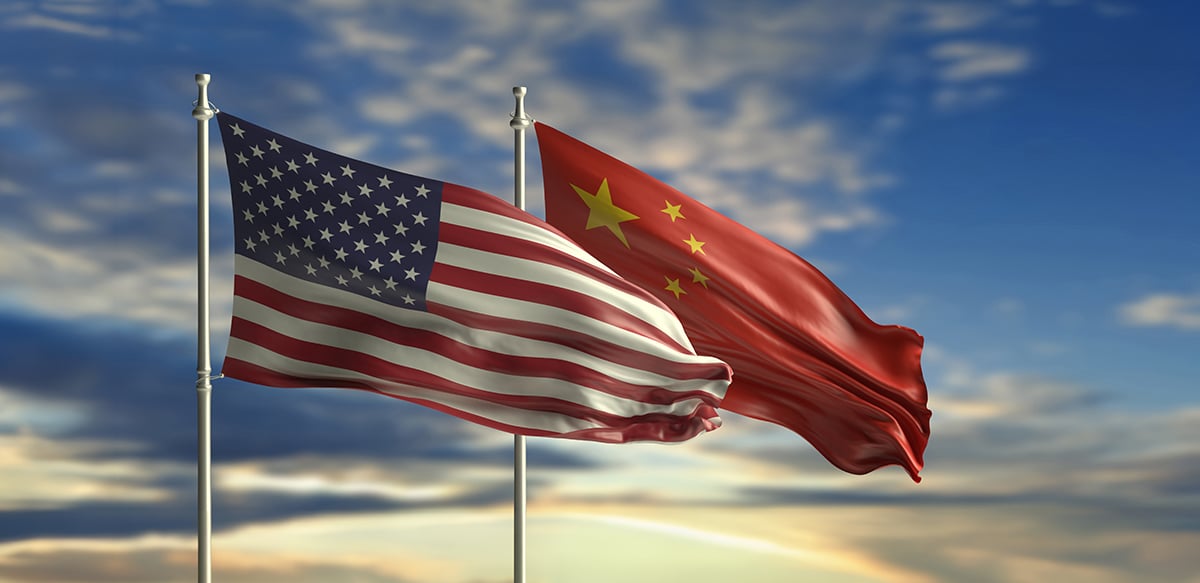
Analysts and journalists had been saying for days that Donald Trump is a weaker US president than when he last met his Chinese counterpart Xi Jinping, in Busan back in October, when both leaders cooled an escalating trade fight.
Trump arrived in Beijing this week – accompanied by his favourite business leaders including Elon Musk, Jensen Huang and Tim Cook – under pressure from the Iran war, strained alliances, domestic inflation and escalating divisions within his own base. At minimum, he will have wanted to fly back to Washington having secured some demonstrable economic wins.
Xi is not free of pressure either, of course. Weak domestic demand, property-sector stress, and slower growth continue to weigh on Beijing. But Chinese officials and analysts appear increasingly confident that time is working in China’s favour. Beijing sees the US as distracted, overextended, and more dependent on Chinese leverage in areas such as rare earths, critical minerals and supply chains. In summary: China may be struggling, but it believes the US is struggling more. Xi’s reference to the Thucydides Trap made the subtext unusually explicit: Beijing sees itself as the rising power and the US as the one at risk of decline. Trump rejected that reading, arguing Xi was referring to the Biden years – a neat bit of rhetorical footwork, but not exactly a meeting of minds.
These dynamics set low expectations for this summit, where hopes focused on preserving trade de-escalation, preventing new shocks, perhaps applying pressure to open the Strait of Hormuz, and above all creating enough process to keep the relationship from sliding back into crisis.
In the end, while the visit did not produce a reset in US-China relations, it did help maintain tenuous stability in a relationship that remains structurally competitive.
Stabilisation was the main deliverable
For both leaders, simply holding the meeting is what mattered most. US–China channels have narrowed in recent years, and direct presidential engagement remains one of the few guardrails against miscalculation. A “grand bargain” was never a realistic expectation, and instead we saw a continuation of the outcomes of the Busan summit with additional purchase commitments from China and the resumption of some Nvidia sales to Chinese companies.
This stabilisation serves both sides. For China, it reduces external pressure at a time when Beijing needs space to manage weak demand, property-sector stress and slower growth. It also gives China more room to continue a longer-term strategy of reducing dependence on the US market while expanding trade, technology and supply-chain links elsewhere. For Trump, stabilisation can be framed as a win at home. A summit that delivers purchases, tariff relief and calmer markets gives the White House something concrete to sell domestically.
Hence, as expected, the outcomes were mostly trade and commerce oriented. There was no major progress on the harder security issues such as cross-Strait relations, military-to-military risk mitigation, advanced technology controls, or nuclear arms control. This matters because it shows the limits of the summit. The two sides can manage commercial frictions when both see value in doing so, but they remain much further apart on fundamental strategic questions.
The Iran issue was a narrow area of alignment where both Washington and Beijing have an interest in avoiding a wider energy shock and keeping Gulf shipping routes running. The US readout mentioned that both sides “agreed that the Strait of Hormuz must remain open” and that “Iran can never have a nuclear weapon.”
The official Chinese readout of Xi’s discussions with Trump stated that the two leaders agreed to frame the relationship as “constructive, strategic, and stable”, with Xi adding that “the essence of China-US economic and trade relations is mutual benefit and win-win cooperation.” Similarly, the US side struck a positive tone, with Trump himself calling the trip an “incredible visit”. The official US readout mentioned alignment of both leaders on the need for economic cooperation, including expanding market access for American businesses into China and increasing Chinese investment in the US.
Such language may help sustain the current thaw, but it does not resolve the deeper drivers of tension. Washington still sees China as a strategic competitor that has exploited the US-led system and seeks to undermine American leadership. Beijing sees the US as a hegemon trying to contain China’s development. The summit may have stabilised the relationship for now, but it did not change the structural rivalry underlying it.
Modest trade wins
In a win for Trump, China agreed to purchase 200 Boeing aircraft – though that is well below the 500-jet package reportedly under discussion – and the agricultural products that matter to Midwestern farmers, as well as resuming beef shipments. Additionally, Xi expressed interest in purchasing more American oil to reduce China’s dependence on the Strait of Hormuz, though that may be less of a commitment than it sounds given China’s long-term effort to diversify its oil supply, which does not include the US. These announcements will likely prove to be politically useful for Trump, sending a message to business and farm lobbies that China is buying again. They also allow Xi to present China as pragmatic and open for business without conceding on strategic promises.
Business leaders should be careful not to overread purchase pledges. Chinese buying commitments are often commercially flexible and politically framed. Agricultural markets may welcome pledges on soybeans, meat or grain, but China has already diversified toward Brazil and other suppliers. Any agricultural rebound will be capped by strategic mistrust, price competitiveness and Beijing’s desire to avoid renewed dependence on the US.
Technology was also part of the commercial picture. Reuters reported that the US has cleared around 10 Chinese companies, including Alibaba, Tencent, ByteDance and JD.com, to buy Nvidia’s H200 AI chips, which is why Jensen Huang was on this trip. However, it has also been reported that Beijing has been holding up purchases as it pushes Chinese firms toward domestic alternatives.
China is using the summit to reinforce its message that it remains open to foreign investment. The China Securities Regulatory Commission has completed its review of Citigroup’s application to establish a wholly foreign-owned brokerage in China, clearing the way for the bank to become the seventh such brokerage in the country. The timing is notable as Citigroup CEO Jane Fraser was part of the US business delegation, giving Beijing another opportunity to project commercial openness even as broader US–China tensions persist.
Implications for Southeast Asia
For Southeast Asian countries, the summit will be read less as a reset than as a pause in escalation, which is not a bad outcome. The region has little interest in a sharper US–China confrontation that disrupts trade, investment, technology flows or supply chains. A more stable US-China relationship gives Southeast Asian governments more room to manoeuvre.
However, it will not change the common regional playbook to hedge, diversify and avoid choosing sides wherever possible. Many Southeast Asian countries still see the US as an important security and investment partner, but also as an unreliable economic one, particularly after tariff threats hit the region hard. China, meanwhile, remains too large to ignore and too close to dismiss. It is a major source of trade, investment, infrastructure financing and manufacturing demand. But it is also a source of pressure. Chinese industrial overcapacity, low-cost exports and supply-chain dominance can threaten local industries.
The key point is that Southeast Asia should not be painted with a broad brush. Cambodia’s interests are not the Philippines’ interests. Vietnam, Singapore, Indonesia, Malaysia and Thailand each balance economic exposure, security concerns and domestic politics differently. The summit may reduce immediate uncertainty, but it will not stop Southeast Asian governments from looking for optionality between Washington and Beijing.
Implications for the Middle East
The Middle East was not the centre of the summit, but nor was it absent. References to Iran and the Strait of Hormuz in the US readout point to a narrow area of alignment where both Washington and Beijing have an interest in avoiding a wider energy shock and keeping Gulf shipping routes running.
However, these mentions do not appear in the Chinese readout. This gap reinforces the view that any role China may play in resolving the Iran crisis will therefore remain limited. It may encourage restraint, protect its energy interests, and signal support for reopening Hormuz, but it is unlikely to intervene directly or decisively. Beijing does not want a prolonged disruption to global energy flows, but it also does not want to be drawn into a US-led crisis-management framework in the Middle East. Its instinct will be to preserve access, avoid entanglement, and let Washington carry the burden.
Relevance to clients
For multinational corporations, the summit reinforces three points.
- The risks associated with US–China competition are not going away. The relationship may stabilise tactically, but strategic competition remains the operating environment. Companies should not treat a trade truce as a return to the old days, though it could be a new normal.
- Sectoral exposure matters. Agriculture, aerospace, energy, semiconductors, critical minerals, AI, advanced manufacturing and logistics will remain highly sensitive. Firms in adjacent sectors should also expect spillover risk from tariffs, export controls, sanctions, and supply-chain reviews.
- Communications planning should assume volatility. Stakeholders will expect companies to explain their China exposure, supply chain resilience, compliance posture and geopolitical risk controls with precision. Generic statements about “monitoring developments” will not be enough.
Sandpiper is tracking developments across this significant relationship and advising clients on the political, economic, and communications implications. Our proprietary AI-driven policy and issues intelligence solution, Sandpiper Vantage, helps global organisations map, understand and plan for policy shifts across markets in real time, including developments across jurisdictions, languages, and stakeholder networks. For organisations exposed to US-China trade, technology, supply-chain or regulatory risk, now is the time to review messaging and scenario plans. Please contact Sandpiper to discuss how we can support you.